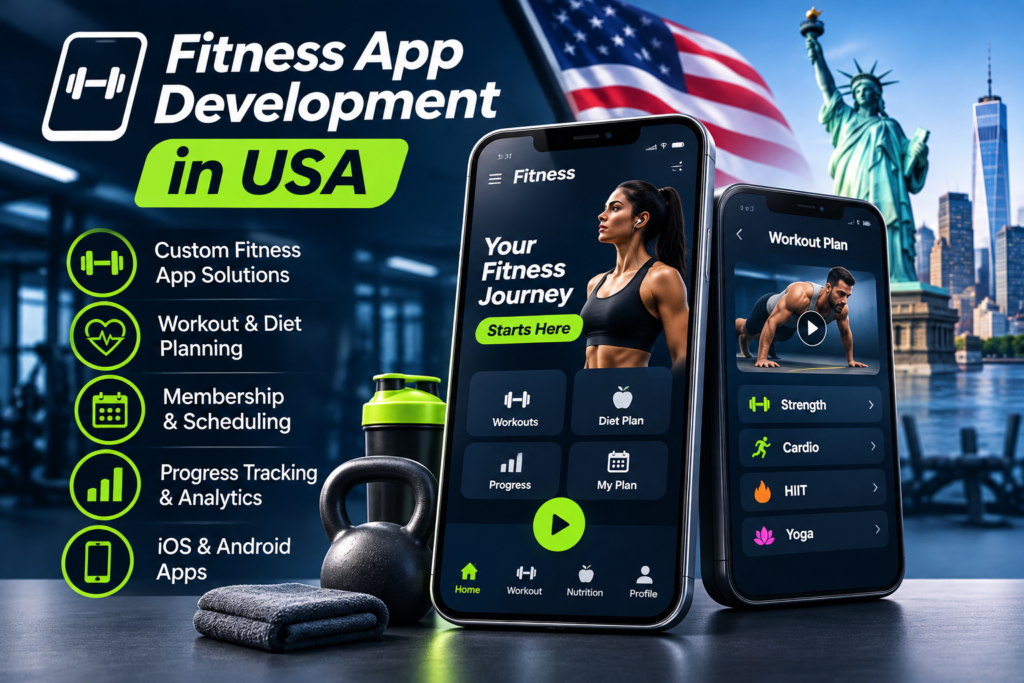
The fitness industry is rapidly embracing digital technology, creating new opportunities for gyms, fitness coaches, personal trainers, and entrepreneurs. From workout tracking and nutrition planning to AI-powered coaching, mobile applications are changing how people manage their fitness goals. This growing demand makes Fitness App Development in USA an exciting opportunity for businesses looking to enter the digital fitness market.
A modern fitness app can help users follow personalised workout plans, monitor their progress, track daily activities, and connect with professional trainers. For businesses, it provides opportunities to attract customers, generate recurring revenue, and build long-term relationships with fitness enthusiasts.
Whether you want to launch a workout application, gym management platform, personal training app, or complete digital fitness solution, understanding Fitness App Development in USA is essential before starting your project.
In this guide, we will explore the important features, development costs, technologies, monetisation models, and latest trends shaping the US fitness app industry.
Why Is Fitness App Development in USA Growing?
The United States has a strong digital fitness market, with consumers increasingly using smartphones, smartwatches, and connected devices to manage their exercise routines.
People want convenient ways to access workout programmes, monitor physical activity, receive nutrition guidance, and communicate with fitness professionals. Fitness applications make these activities accessible from almost anywhere.
According to Grand View Research, the US fitness app market generated approximately $4.1 billion in revenue in 2025 and is projected to reach approximately $10.3 billion by 2033.
This growth creates opportunities for businesses investing in Fitness App Development in USA.
Some important reasons behind this demand include:
- Increasing interest in personal fitness and wellness.
- Growing use of smartphones and wearable devices.
- Demand for personalised workout programmes.
- Popularity of online personal training.
- Increased interest in home workout solutions.
- Convenient access to nutrition and activity tracking.
- Subscription-based digital fitness services.
For startups and established fitness businesses, developing a mobile application can create new ways to serve customers and expand their services.
10 Essential Features of Fitness App Development in USA
A successful fitness application should provide useful functionality, simple navigation, and a smooth user experience. The features you choose will depend on your target audience and business objectives.
Here are ten important features to consider when planning Fitness App Development in USA.
1. User Registration and Personal Profiles
Every fitness application should make it easy for users to create accounts and manage their personal information.
During registration, users may provide details such as:
- Name and email address.
- Age and fitness experience.
- Fitness goals.
- Workout preferences.
- Activity level.
- Preferred training schedule.
A personalised profile helps the application provide a more relevant experience.
For example, a beginner may receive introductory workout recommendations, while an experienced athlete may prefer advanced training programmes.
Including simple registration and profile management in Fitness App Development in USA helps businesses create personalised experiences from the beginning.
2. Personalised Workout Plans
Workout planning is one of the most important features of a fitness application.
Users want exercise programmes that match their goals, experience, available equipment, and schedules.
Your application can offer workout categories such as:
- Weight training.
- Cardio exercises.
- Strength development.
- Weight management.
- Yoga and stretching.
- Home workouts.
- Beginner fitness programmes.
You can also include exercise demonstrations, instructions, and recommended repetitions.
A well-designed workout planning system makes Fitness App Development in USA more valuable by helping users follow organised fitness routines instead of searching for exercises across different platforms.
3. AI-Powered Fitness Recommendations
Artificial intelligence is creating new opportunities for personalised digital fitness experiences.
An AI-powered fitness application can analyse user preferences, activity records, and workout history to suggest suitable exercise programmes.
Possible AI features include:
- Personalised workout recommendations.
- Adaptive training schedules.
- Exercise suggestions based on progress.
- Automated fitness reminders.
- Activity pattern analysis.
- AI-assisted coaching conversations.
For example, if a user regularly completes beginner workouts, the application may suggest gradually increasing exercise difficulty.
However, AI-generated recommendations should be designed responsibly. Fitness applications should avoid presenting automated suggestions as medical diagnoses or professional healthcare advice.
Adding useful AI capabilities can help businesses differentiate their Fitness App Development in USA projects from basic workout tracking applications.
4. Activity and Progress Tracking
People want to see whether their fitness efforts are producing results. Progress tracking helps users understand their activity levels and stay motivated.
A fitness application can track:
- Daily steps.
- Workout duration.
- Calories burned estimates.
- Distance travelled.
- Exercise frequency.
- Workout history.
- Personal performance records.
The app can display this information through charts, progress summaries, and weekly reports.
During Fitness App Development in USA, progress tracking should be designed to present information clearly without overwhelming users.
Remember that measurements such as calorie expenditure are estimates and can vary depending on the device and calculation method.
5. Nutrition and Meal Planning
Exercise is only one part of many fitness goals. Nutrition planning can make a fitness application more useful by helping users understand their eating habits.
A nutrition feature may include:
- Meal logging.
- Food search.
- Calorie estimates.
- Macronutrient tracking.
- Meal planning.
- Water intake reminders.
- Saved food records.
Some applications also allow users to scan food information or photograph meals for automated analysis.
A nutrition feature can make Fitness App Development in USA more comprehensive by bringing workout and food tracking into one platform.
For nutrition-related recommendations, provide clear limitations and avoid making unsupported medical or dietary claims.
6. Wearable Device Integration
Smartwatches and fitness bands have become important tools for people who monitor their daily activity.
Integrating wearable technology can allow fitness applications to receive information from supported devices and health platforms.
Potential integrations include:
- Apple HealthKit.
- Android Health Connect.
- Garmin devices.
- Fitbit services.
- Supported smartwatch platforms.
Depending on device permissions and available data, applications may access information such as steps, heart rate, activity sessions, and workout records.
Wearable integration is an important consideration in Fitness App Development in USA because it can reduce manual data entry and create a more connected fitness experience.
Always explain what data the app collects and obtain the appropriate user permissions.
7. Online Personal Training and Video Classes
Many fitness enthusiasts prefer professional guidance while exercising. Online training features allow businesses to connect users with coaches through their applications.
Useful functionality includes:
- Live fitness classes.
- On-demand workout videos.
- Personal trainer profiles.
- One-to-one coaching sessions.
- Training schedules.
- Video demonstrations.
- Session booking.
For example, a personal training business can offer paid workout programmes through its app without requiring every customer to visit a physical location.
Including video and coaching functionality in Fitness App Development in USA can help fitness brands expand their services and create additional revenue opportunities.
8. Push Notifications and Workout Reminders
User engagement is a major challenge for fitness applications. People may download an app with good intentions but stop using it after a short period.
Push notifications can encourage users to return by reminding them about planned activities.
Examples include:
- Scheduled workout reminders.
- Weekly progress summaries.
- Class booking notifications.
- Training programme updates.
- Subscription renewal reminders.
- Motivational messages.
Notifications should be relevant and personalised. Sending too many unnecessary alerts can frustrate users and encourage them to disable notifications.
A thoughtful notification strategy is an important part of successful Fitness App Development in USA because it supports consistent user engagement.
9. Secure Payment and Subscription Integration
If your business plans to generate revenue through a fitness app, payment functionality is essential.
You can offer different payment options depending on your business model.
Common options include:
- Monthly subscriptions.
- Annual membership plans.
- Premium workout programmes.
- Personal training packages.
- Paid video courses.
- One-time purchases.
Your application should provide clear pricing, payment confirmation, subscription management, and cancellation information.
Secure payment processing is a key consideration in Fitness App Development in USA, particularly when handling customer billing information.
Payment requirements and app-store billing rules should be reviewed before selecting your payment integration.
10. Social Community and Challenges
Fitness can become more engaging when users have opportunities to interact with others.
A community feature allows members to share achievements, participate in challenges, and encourage each other.
Possible features include:
- Fitness challenges.
- Group workout programmes.
- Achievement badges.
- Leaderboards.
- Community discussions.
- Workout sharing.
- Friend invitations.
For example, a 30-day fitness challenge can encourage users to complete regular workouts and track their progress.
Adding social features to Fitness App Development in USA can help create a sense of community and give users additional reasons to return to the application.
Fitness App Development Cost in USA
One of the most common questions businesses ask is how much it costs to build a fitness application.
The cost of Fitness App Development in USA depends on the application’s complexity, design, platform, integrations, and development team.
A simple workout tracker will generally cost less than a complete fitness platform with AI coaching, wearable integrations, video streaming, and subscription management.
Estimated Fitness App Development Costs
The following figures are illustrative planning ranges in US dollars, not fixed industry prices or supplier quotations.
| App Type | Estimated Development Cost |
|---|---|
| Basic fitness tracking app | $20,000–$40,000 |
| Workout and training app | $40,000–$80,000 |
| Nutrition and fitness app | $50,000–$100,000 |
| Personal training app | $60,000–$120,000 |
| Advanced fitness application | $100,000–$200,000+ |
| AI-powered fitness platform | $150,000–$300,000+ |
The final cost can be higher when a project requires extensive custom development, complex integrations, live video infrastructure, or advanced data processing.
Factors That Affect Fitness App Development Costs
Several factors influence the overall budget for Fitness App Development in USA.
1. App Complexity
Applications with basic workout tracking require fewer development resources than platforms with personalised recommendations, nutrition tools, and advanced analytics.
2. UI and UX Design
A custom interface with animations, interactive dashboards, and personalised screens may require additional design and development time.
3. Platform Selection
Building for iOS, Android, or both platforms affects the project budget. Cross-platform development may reduce duplicated work, depending on the app’s technical requirements.
4. Third-Party Integrations
Wearable devices, payment gateways, video services, and external data platforms can increase development complexity.
5. Backend Infrastructure
User accounts, workout records, subscriptions, notifications, and analytics require reliable backend systems.
6. Maintenance and Updates
After launch, the application needs bug fixes, security updates, compatibility improvements, and new features.
When budgeting for Fitness App Development in USA, businesses should consider both the initial development cost and the ongoing expenses of operating the application.
Latest Fitness App Development Trends in USA
Fitness technology continues to evolve as businesses explore new ways to improve digital experiences.
Understanding current trends can help you plan a competitive product.
1. Artificial Intelligence and Personalisation
AI is becoming an important part of digital fitness experiences. Applications can use user activity and preferences to suggest personalised workouts, provide progress insights, and improve recommendations.
2. Wearable Technology Integration
Smartwatches, fitness bands, and other connected devices allow users to monitor activity and share relevant information with fitness applications.
3. Virtual Fitness Training
Live classes and on-demand workout videos make professional fitness guidance more accessible. Users can follow training programmes from home or while travelling.
4. Gamification and Fitness Challenges
Points, achievements, progress badges, and challenges can make exercise more engaging. These features can encourage users to maintain consistent routines.
5. AI-Assisted Nutrition Tracking
Some modern applications use image recognition and AI-assisted tools to help users record meals and estimate nutritional information.
6. Personalised Health and Fitness Insights
Applications increasingly focus on turning collected activity data into understandable summaries that users can use to review their routines.
These developments are shaping the future of Fitness App Development in USA and creating opportunities for businesses to build more personalised digital fitness products.
How to Choose the Right Fitness App Development Company in USA
Choosing the right development partner is an important step in turning your application idea into a working product.
A reliable development company should understand your business goals, technical requirements, and target audience.
Consider these factors before making a decision:
- Relevant experience: Review the company’s previous mobile application projects.
- Technical expertise: Check its experience with iOS, Android, APIs, cloud infrastructure, and wearable integrations.
- UI and UX capabilities: Look for a team that can create an easy-to-use fitness application.
- Security knowledge: Ask how the company protects personal information and user accounts.
- Project transparency: Discuss timelines, deliverables, costs, and communication.
- Post-launch support: Confirm whether maintenance and future updates are available.
The right development partner can help you plan and execute Fitness App Development in USA according to your business requirements and available budget.
Important Security and Privacy Considerations
Fitness applications can collect sensitive or personal information, including activity records, health-related measurements, and user account details.
Businesses should consider privacy and security from the beginning of development.
Important practices include:
- Using secure authentication.
- Encrypting sensitive information.
- Requesting clear user permissions.
- Collecting only necessary data.
- Providing transparent privacy policies.
- Offering appropriate account and data controls.
- Testing applications for security weaknesses.
Depending on the app’s features and business activities, US privacy laws and regulations may apply. HIPAA does not automatically apply to every consumer fitness app; businesses should assess their specific legal obligations.
A privacy-focused approach can help users feel more confident when using your application.
How to Start a Fitness App Development Project
Building a successful application requires more than choosing features and hiring developers. You need a clear plan that connects your business objectives with user requirements.
Follow these steps:
- Choose your app idea: Decide whether you want a workout tracker, nutrition app, gym platform, or personal training application.
- Research your target audience: Understand the needs and preferences of your intended users.
- Analyse competitors: Study existing applications to identify useful features and opportunities for differentiation.
- Define essential features: Start with the functionality needed to solve your users’ main problems.
- Prepare your budget: Estimate development, infrastructure, marketing, and maintenance expenses.
- Select a development team: Choose professionals with relevant experience.
- Build a minimum viable product: Launch a focused first version before investing in every advanced feature.
- Test the application: Check performance, usability, security, and compatibility.
- Launch and collect feedback: Use user feedback to identify improvements.
- Improve continuously: Release updates and new features based on actual user needs.
Following a structured process can make Fitness App Development in USA more manageable and reduce the risk of spending money on unnecessary features.
Conclusion
The demand for digital fitness solutions continues to create opportunities for gyms, startups, personal trainers, and established fitness brands. A well-developed application can provide workout planning, activity tracking, nutrition management, wearable integration, and personalised fitness experiences in one convenient platform.
Successful Fitness App Development in USA requires a clear business strategy, useful features, reliable technology, and a strong focus on user experience. Understanding development costs and current technology trends can also help businesses make better investment decisions.
Whether you are planning a simple workout application or an advanced AI-powered fitness platform, starting with a clear idea and the right development strategy can help turn your concept into a valuable digital product.
Frequently Asked Questions (FAQs)
1. How much does Fitness App Development in USA cost?
The cost depends on the application’s complexity and features. A basic fitness app may cost around $20,000–$40,000, while advanced applications with AI, wearable integrations, and video features can cost considerably more.
2. How long does it take to develop a fitness app?
A basic application may take approximately 2–4 months, while a more complex fitness platform can take 6–12 months or longer. The timeline depends on features, integrations, testing, and development resources.
3. What features should a fitness app include?
Important features include user registration, workout plans, activity tracking, nutrition management, wearable integration, push notifications, payment options, and progress reports.
4. Is AI important for fitness app development?
AI can support personalised workout recommendations, activity analysis, and nutrition tracking. However, it should be implemented according to the application’s purpose and should provide reliable, clearly explained recommendations.
5. Can a fitness app connect with smartwatches?
Yes. Fitness applications can integrate with supported devices and platforms such as Apple HealthKit, Android Health Connect, Garmin, and Fitbit services, depending on available APIs and permissions.
6. How do fitness applications make money?
Common monetisation methods include monthly subscriptions, annual memberships, premium features, paid workout programmes, personal training services, and advertising.
7. Should I develop a fitness app for iOS or Android?
The right platform depends on your target audience, budget, and business goals. Many businesses choose to support both platforms, either through separate native applications or a suitable cross-platform solution.
8. How can I make my fitness app successful?
Focus on solving a clear user problem, providing a simple experience, offering useful features, protecting user data, and improving the application through customer feedback.
9. Is wearable integration necessary for fitness apps?
It is not essential for every fitness application, but wearable integration can improve convenience by allowing users to connect supported devices and automatically sync activity information.
10. Why should businesses invest in Fitness App Development in USA?
It can help fitness businesses reach digital audiences, offer online services, generate recurring revenue, improve customer engagement, and expand beyond traditional physical fitness services.