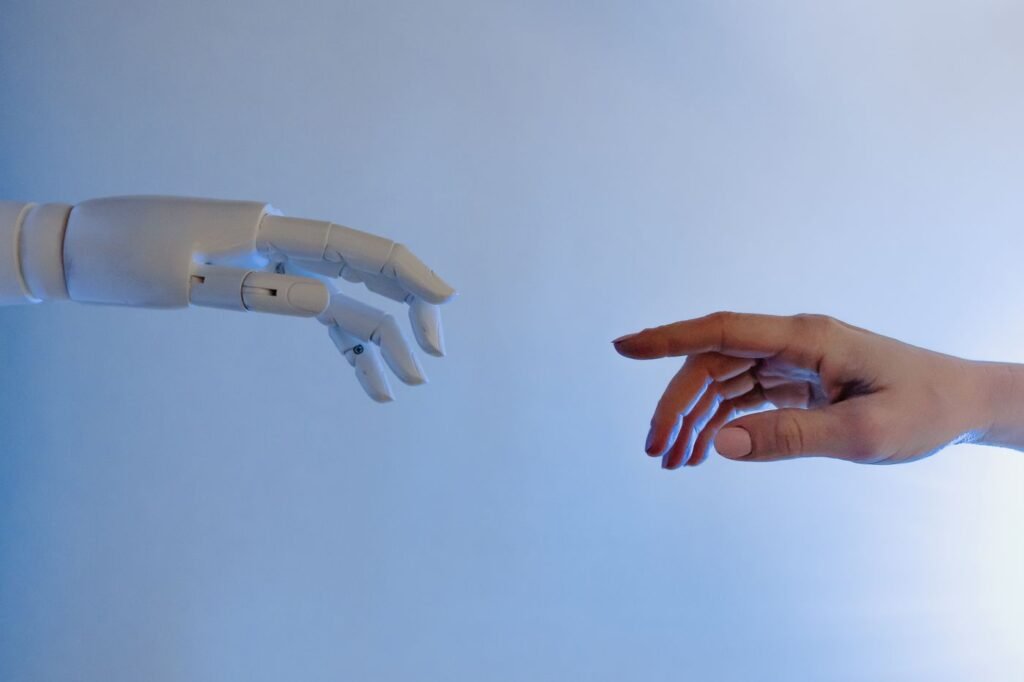
AI and automation are two of the most talked-about ideas in business technology, and they are often mentioned in the same breath. It is easy to assume they mean the same thing. They do not. Understanding the difference between AI and automation matters, because each one solves different problems, and the best results usually come from using them together.
In this guide, you will learn what artificial intelligence and automation each do, how they differ, and how they work together in real businesses. You will also see practical examples and a simple way to decide which one your business needs first.
What Is Artificial Intelligence (AI)?
Artificial intelligence, or AI, is technology that can perform tasks that normally require human thinking. An AI system learns from data, recognises patterns, and improves its results over time. Rather than following one fixed set of instructions, it adapts as it sees more examples.
Common examples of AI in business include chatbots that understand customer questions, tools that recommend products based on past behaviour, and software that predicts which leads are most likely to buy. In each case, the system makes a judgement, not just a repetition.
AI is most useful when a task involves language, images, predictions, or decisions that change from one case to the next. If the right answer depends on context, AI can help.
What Is Automation?
Automation is technology that carries out repetitive tasks without human input, by following rules set in advance. When a specific trigger happens, the system performs a specific action, every time, in exactly the same way.
Everyday examples include sending a welcome email when someone joins a mailing list, creating an invoice when an order is placed, or moving customer details from a web form into a CRM. Nothing is learned or judged. The system simply does what it was told to do.
Automation is most useful when a task is repetitive, predictable, and high in volume. It saves time, reduces mistakes, and keeps work moving even outside office hours.
AI and Automation: Key Differences
The table below sums up the main differences between AI and automation.
| Artificial intelligence | Automation | |
|---|---|---|
| What it does | Learns from data and makes judgements | Follows fixed rules to complete tasks |
| How it works | Analyses patterns and adapts over time | Runs the same steps every time |
| Best for | Decisions, language, and predictions | Repetitive, predictable work |
| Example | A chatbot that answers new questions | An email sent automatically after signup |
How AI and Automation Work Together
AI and automation are stronger together than either is alone. AI provides the thinking, and automation provides the doing. AI decides what should happen next, and automation makes it happen, quickly and consistently.
AI makes automation smarter
A traditional automated workflow can only follow the rules it was given. Add AI, and the workflow can handle variation. For example, an AI tool can read a customer email, work out what the customer needs, and then trigger the right automated response, whether that is a refund, a booking, or a reply from the support team.
Automation carries out AI decisions
AI on its own only produces an answer. Automation turns that answer into action. If an AI model flags a sales lead as high priority, automation can assign it to the right salesperson, send a follow-up email, and log the activity in the CRM, all without anyone lifting a finger.
A simple example: lead follow-up
Consider a website contact form. Automation alone can send a thank-you email. With AI and automation working together, the system can also score the enquiry, draft a personalised reply based on the enquiry details, and book the lead into the right person’s calendar. The business responds faster, and no enquiry is missed.
Real-World Examples of AI and Automation
Customer support
AI chatbots answer common questions instantly, while automation routes complex cases to a human agent with the full conversation history attached. Customers get faster answers, and support teams spend their time on the cases that need a person.
Marketing and sales
AI can segment audiences and predict which messages will perform best, while automation sends the right message to the right person at the right time. Together they keep campaigns personal without adding manual work. Healthcare providers, for example, use AI automation to handle appointment reminders and patient follow-ups. You can read more in our guide to AI automation in healthcare.
Business operations
AI can forecast demand or flag unusual activity in financial data, while automation updates stock levels, raises purchase orders, or alerts the team. The result is fewer stockouts, fewer errors, and less time spent on admin.
When Should Your Business Use AI, Automation, or Both?
Start with automation if the task is repetitive and the rules are clear. Automating routine work usually delivers the fastest return, because it saves hours every week from day one.
Add AI when the task needs judgement, such as understanding customer messages, personalising content, or predicting outcomes. AI is worth the investment when better decisions translate into more sales, better service, or lower risk.
In most cases, the best approach is a combination. Our AI automation services combine both, so the thinking and the doing work as one system: AI handles the decisions, and automation handles the execution. That is how small teams achieve the output of much larger ones.
Frequently Asked Questions About AI and Automation
Is AI the same as automation?
No. Automation follows fixed rules to complete repetitive tasks, while AI learns from data and makes judgements. Many modern systems combine the two, which is why the terms are often used together.
Can automation work without AI?
Yes. Most automation is rule-based and needs no AI at all. Simple workflows, such as sending an invoice when an order is placed, work perfectly well on rules alone. AI becomes useful when the workflow needs to handle variation or make decisions.
What is an example of AI and automation working together?
A common example is customer support. An AI chatbot understands the customer’s question and decides on the best answer, while automation routes the conversation, updates the CRM, and follows up by email if the issue is not resolved.
Which should a small business start with?
Most small businesses should start with automation, because it removes repetitive work quickly and at low cost. Once the routine tasks are automated, AI can be added where judgement or personalisation will make the biggest difference.
Put AI and Automation to Work for Your Business
AI and automation are not competing choices. Automation saves time on the work you already understand, and AI helps with the work that needs judgement. Used together, they help your business respond faster, serve customers better, and grow without adding headcount.
If you are ready to see what AI and automation could do for your business, Request a Quote today and tell us about your goals. You can also follow CloudLift Tech on Pinterest for more practical guides on AI, automation, and web development.